
Sub-Saharan 222 · Updated May 2026
Travel to Mauritania:
The Complete Guide
Few travelers have stood atop the dunes of Chinguetti, ridden the world’s longest iron ore train, or slept under the Sahara stars with only a local guide for company. Mauritania is that rare destination — raw, unhurried, and entirely your own.
📍 Mauritania, West Africa<br>🕐 ~12 min read
7–14
Ideal days to visit
7–14
Ideal days to visit
~$55
Visa on arrival (USD)
$60–100
Daily budget (USD)
Sommaire
Mauritania is one of the last truly off-the-beaten-path destinations in the world — a country where ancient caravan routes cross infinite dunes, where nomadic culture survives in its purest form, and where the silence of the Sahara wraps around you like nothing you have ever known.
Stretching from the Atlantic coast to the heart of the Sahara, Mauritania covers over one million square kilometres, yet receives fewer tourists than almost any country on earth. What it offers in return is extraordinary: sacred libraries buried in desert sand, an iron ore train so long it disappears over the horizon, oases of startling green hidden among rust-red cliffs, and starlit skies unpolluted by any artificial light.
This guide was written with the help of local experts based in Nouakchott. It covers everything you need to plan a safe, rewarding, and unforgettable journey into one of Africa’s most remarkable countries.
Best Places to Visit in Mauritania
UNESCO World Heritage Site
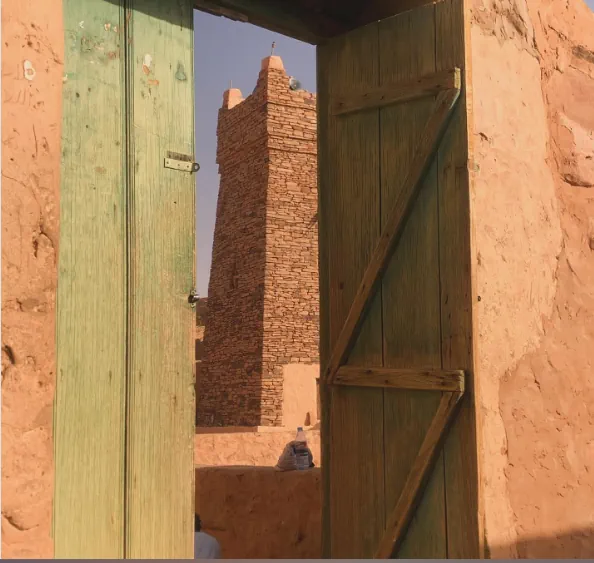
Chinguetti
Once the seventh holiest city of Islam and a gathering point for Saharan caravans, Chinguetti is now a haunting, half-buried treasure. Its ancient libraries preserve thousands of manuscripts dating back to the 13th century. The surrounding dunes of Erg Ouarane are among the most beautiful in West Africa. Plan at least two full days here.
Natural Wonder · Adrar
Terjit Oasis
Hidden at the bottom of a deep canyon in the Adrar plateau, Terjit is a paradise of palm trees, freshwater springs, and cool shade — a breathtaking contrast to the barren landscape above. Swimming in the natural pools beneath the cliff walls is an experience that stays with you long after you leave. Accessible only by 4×4.
Unique Experience
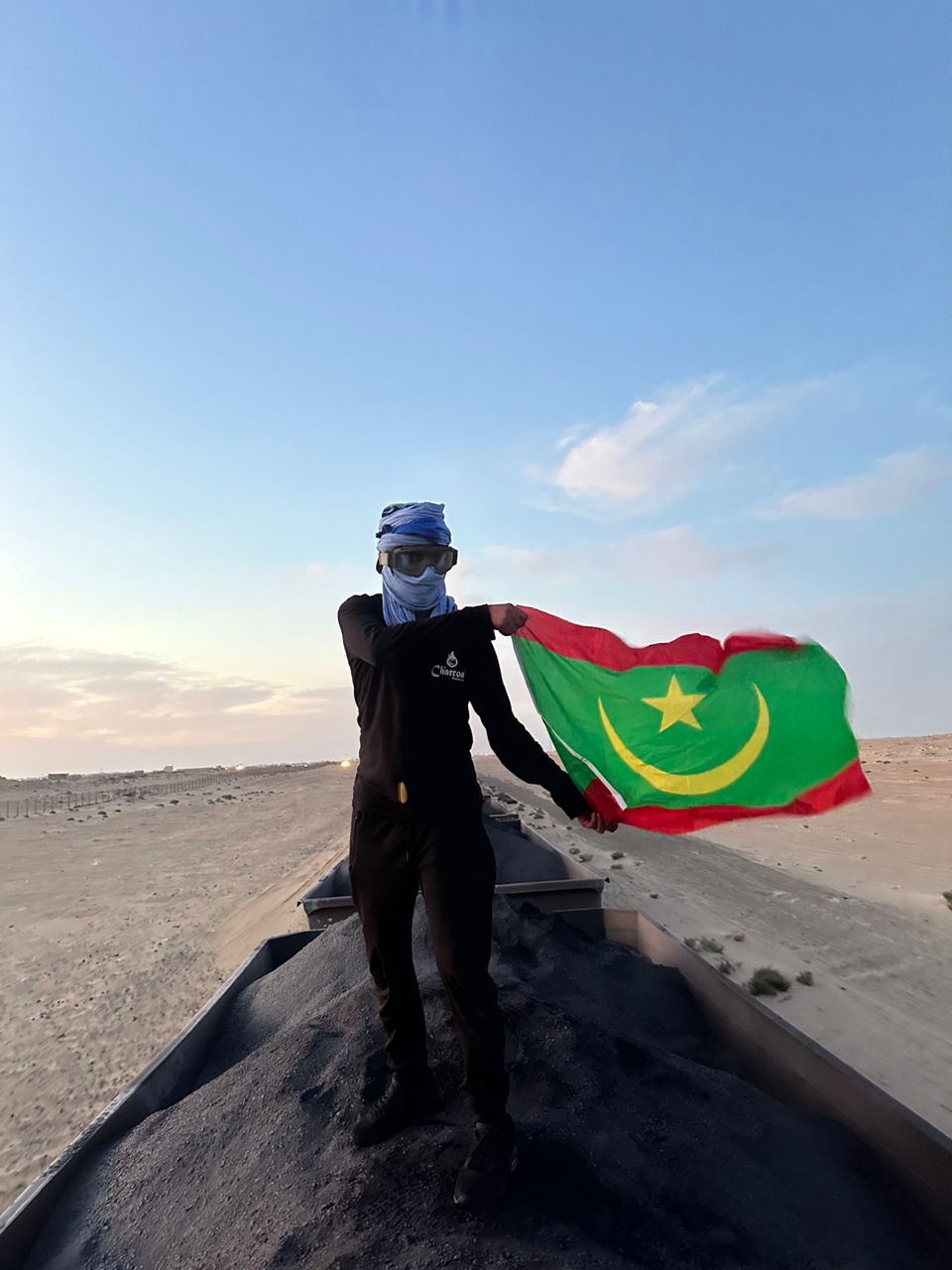
The Iron Ore Train
At up to 3 kilometres long, Mauritania’s iron ore train (the Train du Fer) is one of the longest trains in the world. Travelling from Zouerate to Nouadhibou, it carries iron ore — and adventurous travellers who ride for free in the ore wagons, wrapped in dust and stars. A bucket-list journey unlike anything else on earth.
UNESCO · Ancient Caravan City
Ouadane
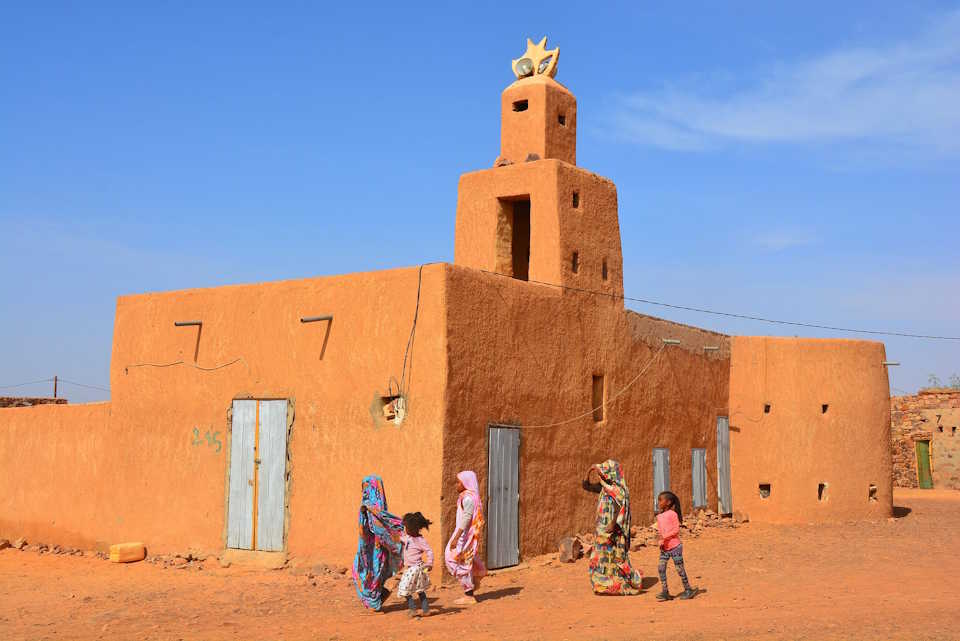
Older and even less visited than Chinguetti, Ouadane is a ghost city of extraordinary beauty — crumbling stone houses, a fortress mosque, and the absolute silence of a town slowly returning to desert. Together with Chinguetti, Tichitt, and Oualata, it forms Mauritania’s four ancient caravan cities listed by UNESCO.
UNESCO Biosphere Reserve
Banc d’Arguin National Park
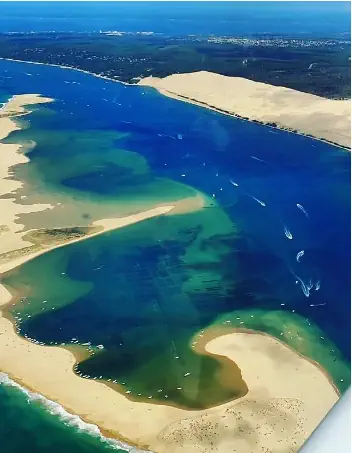
A UNESCO World Heritage Site on the Atlantic coast, this vast wetland is one of the most important bird sanctuaries in the world, hosting millions of migratory birds between Europe and Africa. The park is also home to traditional Imraguen fishing communities who use ancient methods unchanged for centuries.
Capital City · Gateway
Nouakchott
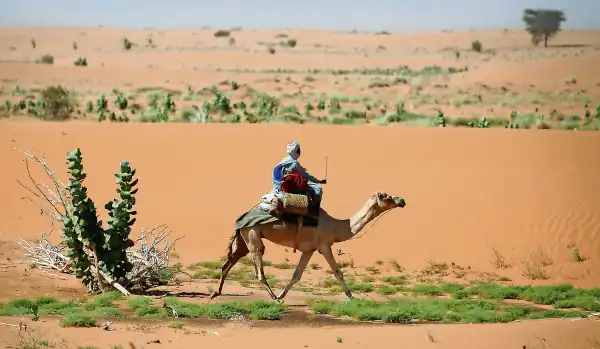
The capital of Mauritania is a sprawling, surprisingly modern city on the Atlantic coast. It serves as the gateway for most trips and rewards curious visitors with its vibrant markets (the Marché Capitale), excellent Mauritanian cuisine, and a spectacular beach where fishermen still haul colorful pirogues ashore at dawn each day.
7-Day Mauritania Itinerary
Arrive at Nouakchott Oumtounsy International Airport, complete visa formalities (~45 min), and transfer to your hotel. In the afternoon, explore the lively Marché Capitale and walk along the Corniche at sunset where fishing boats come ashore. Dinner in a traditional Mauritanian restaurant — try thiéboudienne (rice and fish).
Depart early for the 9-hour drive north to Atar, the capital of the Adrar region. The road crosses scrubby plains that gradually give way to rocky desert. Stop at the Amogjar Pass for dramatic views. Overnight in Atar. Use the evening to organise your desert programme with your guide.
A full day in one of Mauritania’s most magical landscapes. Descend into the Terjit canyon by 4×4 and spend the morning swimming in the natural pools beneath the cliffs. After lunch, explore the dramatic rocky plateau of the Adrar, with its ancient volcanic formations and sweeping desert views. Return to Atar or camp nearby.
Drive 2 hours from Atar to Chinguetti across open desert. Spend the day exploring the old quarter: the iconic mosque with its ostrich-egg decorations, the ancient manuscript libraries (request a private visit), and the mud-brick alleyways slowly being swallowed by the Sahara. Late afternoon: climb the dunes of Erg Ouarane for a golden-hour panorama.
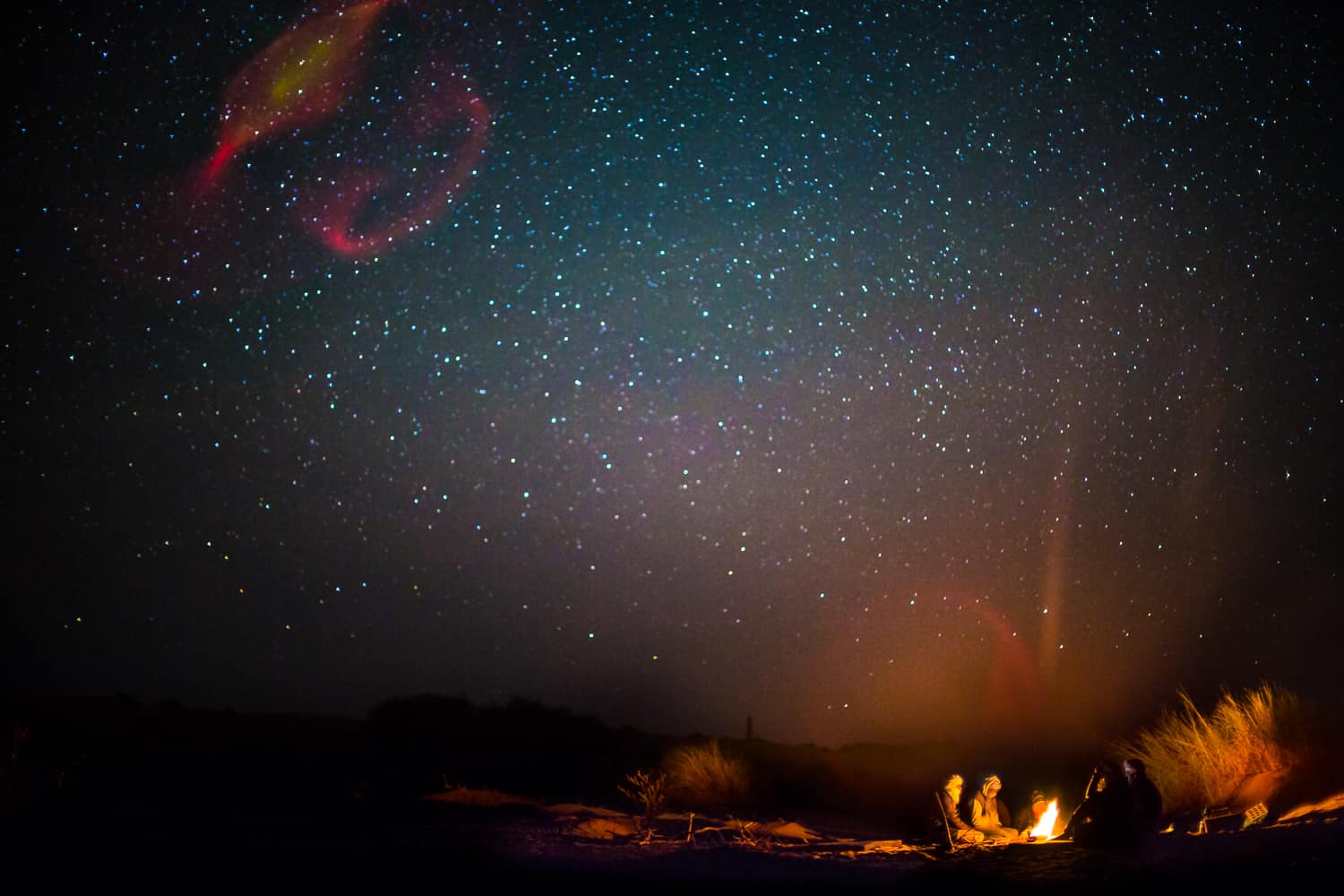
The highlight of most visitors’ trips. Your guide leads you by camel or 4×4 deep into the dunes for an overnight bivouac under the Saharan stars. Watch the desert change colour through sunset — ochre, crimson, violet — then share tea and stories around the fire with your guide. Sleep on mats beneath a sky unpolluted by any light for hundreds of kilometres.
The adventurous extension: continue 100 km east across open desert to Ouadane, Mauritania’s most remote and atmospheric ancient city. Alternatively, spend an unhurried second day around Chinguetti before returning to Atar in the afternoon for your last night in the desert.
Drive back to Nouakchott (allow a full day), with time for a final lunch and souvenir shopping at the market. Evening flights are ideal — flights depart from Nouakchott to European hubs (Paris, Madrid, Istanbul) most evenings.
This itinerary covers the essential highlights of the Adrar region — the most visited and rewarding part of Mauritania. All travel between sites requires a 4×4 vehicle; a local guide and driver are essential for the desert sections.
💡 Extend your trip: With 10–14 days, add the Banc d’Arguin National Park (birdwatching, Imraguen villages), the Iron Ore Train experience (Choum–Nouadhibou overnight), and the ancient city of Oualata in the far east.
Is Mauritania Safe to Travel?
Mauritania has an undeserved reputation for danger, largely based on outdated advisories. In reality, the tourist zone of the Adrar region — which includes Atar, Chinguetti, Terjit, and the main desert routes — is safe, visited regularly by travellers of all nationalities, and has experienced no security incidents for many years.
The key principle is simple: travel with a local guide and stay within established tourist areas. Your guide knows the terrain, the communities, and the current conditions — and their presence alone makes your trip both safer and incomparably richer.
- Nouakchott (capital)
- Adrar region (Atar, Chinguetti, Terjit, Ouadane)
- Banc d’Arguin National Park
- Nouadhibou (coastal city)
- Rosso (Senegal border crossing)
- Mali border region (northeast)
- Remote Saharan routes without a guide
- Tiris Zemmour region (far north)
- Border areas with Algeria
Practical safety tips
Register your trip with your country’s embassy before departure. Always carry sufficient water (minimum 3 litres per person per day in the desert). Inform your guide of your itinerary. Travel in convoy on desert routes where possible. Medical facilities are limited outside Nouakchott — a travel insurance policy with evacuation cover is essential.
Best Time to Visit Mauritania
Mauritania’s climate is dominated by the Sahara. Planning your visit around the seasons makes an enormous difference to your comfort — and survival in extreme heat is genuinely challenging.
| Period | Months | Temperature | Conditions | Verdict |
|---|---|---|---|---|
| Peak season | Nov – Feb | 20–30°C (day) / 5–15°C (night) | Clear skies, cool nights, perfect for desert camping | Best |
| Shoulder | Mar, Oct | 28–38°C (day) | Warmer but manageable; fewer crowds | Good |
| Hot & windy | Apr – May | 35–42°C (day) | Harmattan winds bring sand storms | Avoid if possible |
| Extreme heat | Jun – Sep | 42–50°C (day) | Dangerous heat; minimal tourism | Not recommended |
💡 Pro tip: December and January offer the best combination of comfortable temperatures, clear skies for photography, and the desert in full glory. Book your guide at least 6–8 weeks in advance during this peak period.
Where to Stay in Mauritania
Accommodation in Mauritania is simple but perfectly adequate for the experience. The country has no luxury hotel chains outside Nouakchott — and that is entirely part of its charm.
Nouakchott
The capital has the widest range of options, from international-standard hotels (Monotel, Halima) to comfortable mid-range guesthouses. Expect to pay $50–120/night for a decent room with air conditioning and reliable Wi-Fi.
Atar
The main base for Adrar explorations has several clean and comfortable auberges (guesthouses) run by local families. Rooms typically cost $20–50/night and usually include breakfast. Your guide can recommend the best options based on current conditions.
Desert camps
Spending a night under the Saharan stars in a traditional bivouac is one of the defining experiences of any Mauritania trip. Your guide will set up camp in the dunes — carpets, blankets, mint tea, a fire, and an sky so full of stars it seems impossible. Included in most tour packages.
Chinguetti & Ouadane
Both cities have small family-run auberges in the old town for $15–35/night. These are basic but atmospheric — sometimes sleeping on rooftops under the desert sky. Facilities are minimal; carry your own water supply.
Practical Information
Visa & Entry
Most nationalities (EU, UK, USA, Canada, Australia) can obtain a visa on arrival at Nouakchott International Airport. Cost: approximately $55 USD. The visa is valid for 30 days and is generally straightforward to obtain. Bring USD or Euros in cash. Some nationalities (check your country’s Foreign Ministry) require a visa in advance — verify before travelling.
Currency & Money
The currency is the Mauritanian Ouguiya (MRU). ATMs exist in Nouakchott but are unreliable outside the capital. Bring sufficient cash in USD or Euros and exchange at the airport or in Nouakchott before heading into the desert. Credit cards are accepted only at larger Nouakchott hotels.
Getting Around
Travelling within Mauritania requires flexibility. The main Nouakchott–Atar road (510 km) is paved and can be driven in 8–9 hours in a standard car. All desert routes — to Terjit, Chinguetti, Ouadane, and beyond — require a 4×4 vehicle driven by someone who knows the terrain. This is not optional: the desert is featureless and track signs are non-existent.
Health & Vaccinations
No vaccinations are legally required for entry. However, doctors recommend being up-to-date on hepatitis A, typhoid, and rabies vaccines. Malaria prophylaxis is advisable in the south and during rainy season. Medical facilities in the desert are essentially non-existent — carry a well-stocked first aid kit, oral rehydration salts, and prescription medication for at least 5 days beyond your planned trip.
Communication
Mobile data (Mauritel, Mattel) works in Nouakchott, Atar, and Chinguetti town centres. Desert areas have no coverage whatsoever — a satellite communicator (Garmin inReach) is worth considering for extended desert trips. Wi-Fi at hotels is available in Nouakchott and inconsistent in Atar.
Cultural etiquette
Mauritania is a conservative Muslim country. Dress modestly (shoulders and knees covered for both men and women in public). The holy month of Ramadan changes opening hours and the social atmosphere significantly — check dates if planning to travel. The Islamic greeting “As-salamu alaykum” is appreciated everywhere. Photography of people, military installations, and government buildings requires permission.
Frequently Asked Questions
Explore Mauritania with a Local Guide
The desert does not reveal itself to those who merely pass through. Our Mauritanian partner guide has been leading expeditions in the Adrar for over 15 years — he knows every dune, every hidden spring, and every nomadic family willing to share their fire and their stories.
With our tours, you can discover:
- The hidden oases of the Adrar plateau
- Giant dune fields of the Sahara
- Ancient caravan routes and manuscript cities
- Nights camping under the desert stars
- Traditional nomadic families and Mauritanian culture
- The legendary Iron Ore Train experience
All tours depart from Nouakchott in 4×4 Land Cruisers with an experienced driver and guide. Group sizes are kept small (2–8 people) for a genuine experience, far from mass tourism.
Request a personalised itinerary →